


Understandig Limited Liability Company in Nepal— Law, Risks & Practical Guide
Introduction
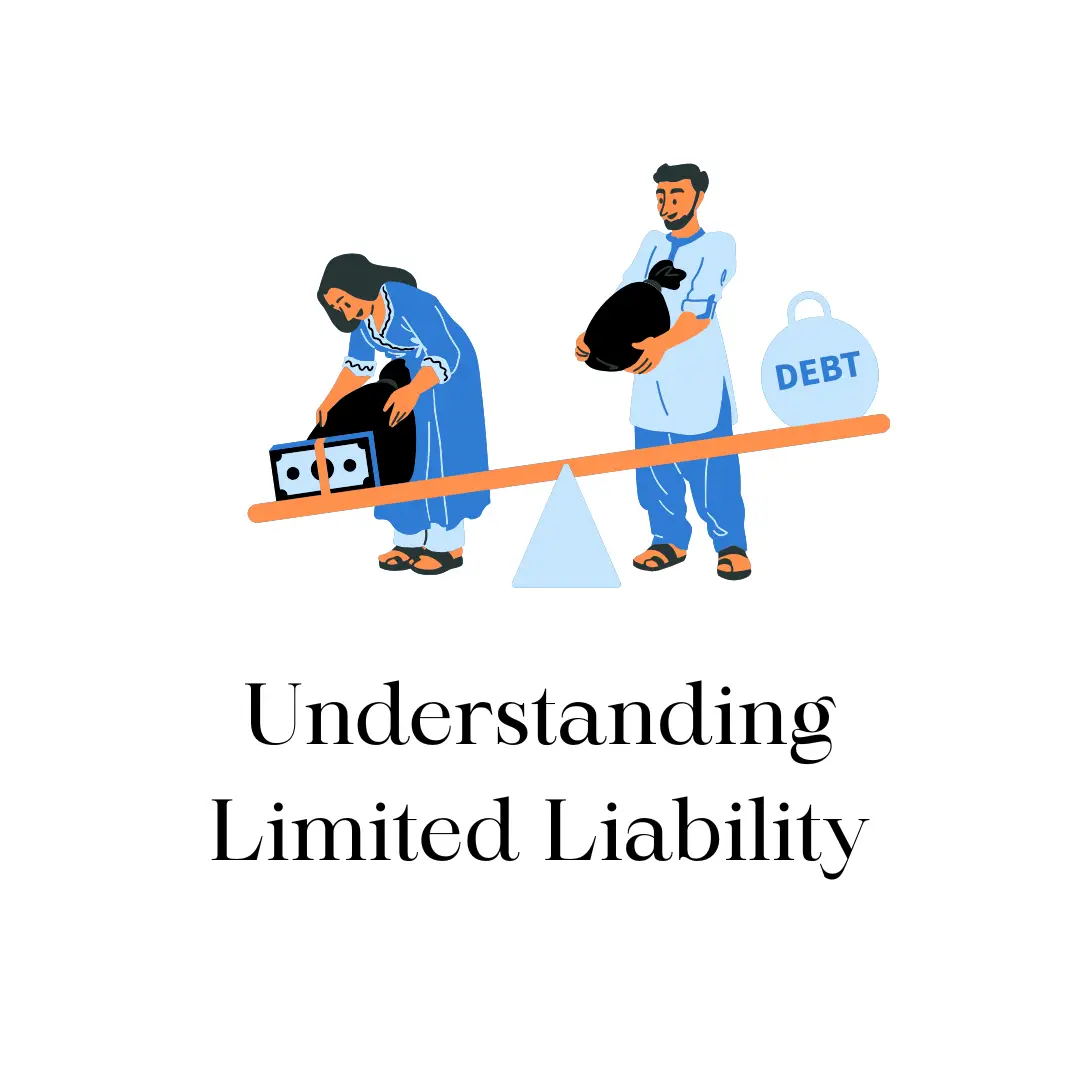
Limited liability is the rule that attracts most entrepreneurs to incorporate: it limits a shareholder’s monetary exposure to the amount unpaid on their shares (or their agreed contribution), rather than exposing personal wealth to business debts. Sounds simple, but in practice, limited liability in Nepal is a legal package with statutory protections, exceptions, commercial realities (guarantees, lender covenants), and an active judicial doctrine that will strip the shield away in certain circumstances. This post explains the statutory foundation, how limited liability functions across corporate vehicles (companies), the fault-lines where liability can reappear, and concrete steps founders, investors and creditors should take to manage risk.
1) What “limited liability” means?
Short definition. Limited liability means an owner’s personal liability for enterprise debts is restricted to a pre-determined monetary limit — typically the unpaid portion of their share capital or agreed contribution. For a fully paid share, the shareholder has no further liability for corporate debts. This encourages investment by separating personal and corporate risk.
Policy rationale. Limited liability promotes entrepreneurship, capital formation and efficient risk allocation: investors can commit capital without risking their life savings, banks can structure lending against corporate assets, and managers can run businesses without every creditor suing every owner personally. But the shield works only where the corporate form is genuine and lawfully used.
2) Statutory foundation in Nepal — Companies Act & related laws
The Companies Act, 2063 (2006) expressly codifies the limited liability principle: “The liability of a shareholder of a company incorporated under this Act in respect of its transactions shall be limited to the maximum value of shares which he has subscribed or undertaken to subscribe.”
That is the baseline: incorporated under the Companies Act, and the shareholders’ statutory exposure is capped by their share commitment. The Companies Act also sets out directors’ duties and corporate governance rules, which interact with limited liability in important ways (breach of duty can attract liability).
Practical legal takeaway: The statutory shield exists. But the law also creates duties, registries, insolvency remedies and criminal/policy exceptions that may strip or bypass the shield in particular circumstances.
3) Which business vehicles give limited liability in Nepal?
- Private limited company / Public limited company: Classic corporate limited liability for shareholders under the Companies Act (most common route for startups, SMEs and investors).
Non-limited forms: sole proprietorships and partnerships expose owners/partners to unlimited personal liability — creditors can pursue personal assets.
4) How the shield actually operates — corporate personality & asset separation
Limited liability does two things in practice:
- Recognises the company as a separate legal person able to hold property, contract and be sued in its own name.
- Requires a separation of corporate and personal assets — corporate assets satisfy corporate debts; personal assets of shareholders/partners generally do not.
Key practical points:
- Unpaid share capital is the immediate statutory hook for creditor claims against shareholders (i.e., if a shareholder has promised NRs X but not paid, creditors can call for unpaid amounts).
- Where owners mix corporate and personal affairs (no formal distinction), courts may treat the apparent separation with scepticism.
5) The important exceptions — when the shield may fail
Limited liability is powerful but not absolute. Nepalese law and judicial practice recognise exceptions — the most important are:
(a) Personal guarantees and contractual undertakings
If a shareholder or director signs a personal guarantee, indemnity or security for corporate debt, they are personally liable under that contract. This is the most common and predictable way creditors secure remedies — lenders insist on personal guarantees precisely because statutory limited liability alone is often insufficient. (Commercial reality: guarantee = personal liability.)
(b) Fraud, sham, façade and misuse — “piercing” or “lifting” the corporate veil
Courts can and do lift the corporate veil where the company is used to perpetrate fraud, evade legal obligations, or is merely an alter ego/agent of the controlling person. Nepalese jurisprudence recognises this doctrine and has applied it in cases where corporate personality was abused to avoid liabilities or perpetrate wrongs. The doctrine is exceptional, fact-sensitive, and invoked by courts cautiously.
(c) Statutory exceptions (insolvency, tax, labour, banking law)
Statutes dealing with insolvency, taxation and banking frequently include provisions that limit the protective reach of limited liability:
- Insolvency law gives courts and liquidators powers to undo certain transactions, investigate fraudulent transfers, and pursue responsible persons in winding-up.
- Tax and employment statutes may create obligations enforceable against officers or related persons in specified circumstances.
(d) Directors’ and officers’ personal liability for breaches
Directors owe statutory duties (honesty, diligence) under the Companies Act. If they act fraudulently, negligently, or in breach of specific statutory duties, the law permits personal liability and penalties. Courts and regulators will hold directors accountable in those cases.
Bottom line: Limited liability reduces but does not eliminate exposure. Where you see guarantees, fraud, statutory exceptions or blurred corporate form — expect the shield to be challenged.
6) Piercing the corporate veil — how courts approach it in Nepal
The judicial doctrine is not mechanical. Internationally, courts consider whether the company is a mere façade concealing the facts, used to perpetrate fraud, or an agent/subsidiary controlled for improper ends. Nepalese courts have case law where the veil was lifted, where the company structure was abused. Scholarly and practitioner analyses summarise Nepal’s approach as aligned with common-law principles, but applied cautiously and fact-specifically.
Practical rule: don’t treat veil-lifting as a remote possibility — it’s a serious risk when governance is weak, records are fuzzy, or the company exists only on paper.
7) Lenders & creditors: how limited liability affects lending decisions
Lenders price the limited liability risk into credit decisions:
- Security & charges: banks take charges over corporate assets, mortgages, and often register charges under statutory registries.
- Personal guarantees: lenders routinely require personal guarantees from promoters — this converts limited liability into practical, enforceable personal exposure.
- Group and related-party exposure: banks examine inter-company transactions and will insist on ring-fencing corporate cashflows.
If you are borrowing, expect a covenant package, security documents, and due diligence — limited liability is a starting point, not a finish line.
8) Insolvency, wrongful transactions and post-insolvency liability
Under Nepal’s Insolvency Act, liquidators and courts have powers to review pre-liquidation transactions (preferences, transfers at undervalue), to set aside voidable transactions, and to allocate responsibility for misconduct. A company’s limited liability doesn’t shield directors or controllers from consequences of insolvency-era misconduct.
Examples of enforcement actions include:
- Recovery of diverted assets by liquidators.
- Director disqualification or personal liability for reckless trading or failure to keep proper books;
- Criminal prosecution where fraudulent trading occurred.
9) Tax, employment and regulatory layers that pierce the corporate bubble
Corporate separateness does not make the company invisible to special statutory regimes:
- Tax: the company is a separate taxpayer, but tax authorities have investigation and anti-avoidance powers; in some cases, assessments attach to responsible officers.
- Labour & social security: unpaid statutory dues (wages, social security, pensions) are high-priority claims and regulators can pursue responsible persons in some contexts.
- Banking & financial sector: regulators have separate statutes (e.g., for banks/BFIs) that allow extraordinary supervisory actions that may affect limited liability in practice.
Rule for founders: statutory compliance matters because regulatory non-compliance often produces obligations that pierce the corporate veil or create director-level risks.
10) Comparative snapshot: Limited liability vs unlimited structures
| Feature | Limited liability (company/LLP) |
| Personal risk | Limited (to shares/contribution) |
| Investor appeal | High — clear exit & transferability |
| Lender preference | High with security/guarantees |
| Compliance | Higher (registries, audits) |
| Tax | Separate taxpayer |
11) Practical checklist: How founders protect limited liability — and avoid losing it
- Keep corporate records impeccable. Minutes, accounts, bank separation — no commingling.
- Avoid informal transfers between promoter personal accounts and company funds. Document all transactions.
- Think twice before signing personal guarantees. Limit them in amount and duration; negotiate carve-outs.
- Follow the director’s duties rigorously. Act honestly, keep proper books, and avoid reckless trading when insolvency looms.
- Comply with tax, labour and social security obligations. Priority claims can undermine corporate protections.
- Structure inter-company loans and group support formally. Use market terms and documented agreements.
- Obtain insurance (D&O, professional indemnity). It’s cheaper than post-fact litigation.
- Use independent valuations and arms-length contracts where possible. This helps defend against claims of fraud or undervalued transfers.
- Plan exit and insolvency scenarios in shareholder/partner agreements. Pre-agreed dispute resolution and buyout clauses reduce leverage for creditors.
12) For creditors & counterparties: due diligence checklist
- Confirm registration status and paid-up capital (OCR / registrar checks).
- Check charges and encumbrances against corporate assets.
- Demand audited financials and bank comfort letters.
- Insist on personal guarantees where corporate creditworthiness is limited.
- Ask for corporate governance evidence (board minutes, related-party disclosures).
13) Law & doctrine (brief)
Nepali courts have applied the veil-lifting doctrine in cases where the corporate form was used to frustrate legal obligations or perpetrate fraud. Scholarly treatments and practitioner analyses summarise these rulings and identify patterns: façade companies, sham transfers, and agency/subsidiary abuse are common fact patterns for veil-lifting. These authorities underline the prudential message: the veil is real but fragile when the form is abused.
14) How limited liability interacts with foreign investment & cross-border issues
Foreign investors in Nepal typically favour corporate vehicles that provide limited liability plus formal governance and repatriation pathways. For cross-border groups, group guarantees and cross-border security raise enforceability questions; lenders will often require Nepal-law-governed corporate vehicles plus local security and local guarantees to secure recovery in Nepalese courts.
15) Common myths — debunked
- Myth: “If I incorporate, creditors can’t touch my house.”
Truth: Only to the extent corporate separateness is preserved. Personal guarantees, fraud, commingling and statutory exceptions can expose personal assets. - Myth: “Directors never pay.”
Truth: Directors can be personally liable for statutory breaches, fraud and wrongful trading; D&O insurance isn’t optional in higher-risk businesses.
16) Practical drafting tips — contracts & shareholder/partner agreements
- Include clear limitation of liability clauses, but never rely on them to protect against fraud or statutory breaches.
- When giving personal guarantees, negotiate caps, sunset clauses, and carve-outs for insolvency-settling events.
- Deadlock and insolvency triggers: include mechanisms for early resolution to avoid aggressive creditor action.
17) Conclusion:
Limited liability is essential to modern commerce in Nepal, codified by the Companies Act and implemented through corporate regimes. But the shield is not a magic wand. It is a conditional legal protection that depends on proper corporate form, compliance with statutory duties, avoidance of fraud, and sensible contracting (e.g., avoiding gratuitous personal guarantees). If you are an entrepreneur, choose the vehicle that matches your capital needs and governance appetite, and implement legal hygiene from day one. If you are a creditor, assume limited liability, but verify, secure and insist on guarantees or charges where necessary.